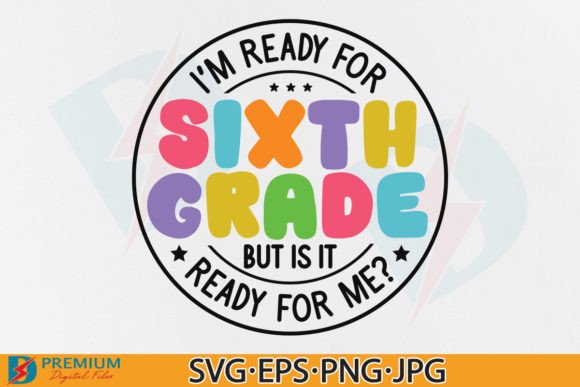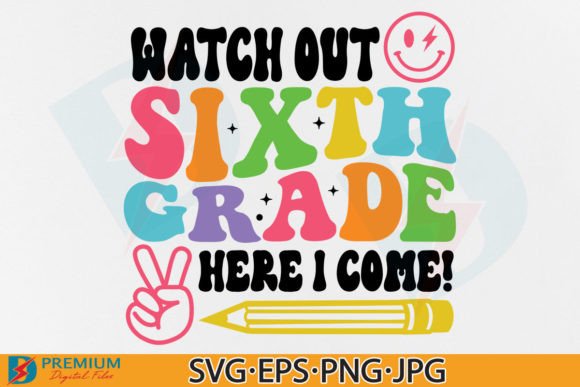
Sixth Grade SVG and 6th Back to School PNG: What Designers and Educators Actually Need to Know
When preparing for the new school year—or supporting a child entering middle school—many adults turn to digital design files for custom apparel, classroom decor, or personalized keepsakes. Among the most commonly searched terms are Sixth Grade SVG and 6th Back to School PNG. These aren’t just decorative graphics; they’re functional assets with specific technical properties that affect how—and whether—they’ll work in your project.
What Makes Sixth Grade SVG and 6th Back to School PNG Distinct?
A Sixth Grade SVG file is a vector-based graphic designed for scalability without loss of quality. It’s built from mathematical paths, making it ideal for resizing across applications like Cricut Design Space, Silhouette Studio, or Adobe Illustrator. An 6th Back to School PNG, by contrast, is a raster image—pixel-based—with a transparent background. At 300dpi, it delivers high-resolution clarity for print, but only at its native size or modest scaling.
The distinction matters in practice. If you’re cutting vinyl for a tumbler decal, the SVG version gives you clean edges at any scale. If you’re layering a “Class of 2030” badge over a photo in Canva, the PNG’s transparency preserves clean compositing—something a JPG can’t do without a visible background.
What You’ll Actually Get (and Why Format Variety Matters)
The ZIP package described includes seven files—each serving a distinct purpose:
- Two PNGs (300dpi, transparent background): Best for digital overlays, scrapbooking, or print-on-demand platforms that accept PNG uploads directly.
- One PNG optimized for Cricut and Silhouette: Structured to avoid common import issues—like hidden layers or embedded fonts—that sometimes break cutting software workflows.
- One JPG (300dpi, white background): Useful for quick mockups, social media posts, or when transparency isn’t needed—and when your platform doesn’t support PNG upload.
- One EPS file: A legacy vector format compatible with older versions of Adobe software and some professional print services requiring PostScript compatibility.
- SVG Group and SVG Ungroup versions: The grouped file maintains layered structure (e.g., text + icon as one unit); the ungrouped version lets you edit individual elements—change font color, adjust spacing, or isolate the “6th” numeral for repositioning.
This variety reflects real-world workflow diversity—not redundancy. A teacher designing bulletin board letters may prefer the grouped SVG for speed. A small-business owner printing custom hoodies might use the EPS for screen-print separation. Someone adding a subtle watermark to a digital handout may reach for the transparent PNG.
How Sixth Grade SVG and 6th Back to School PNG Compare With Alternatives
Not all back-to-school graphics are created equal. Free resources often lack transparency, use low-resolution JPEGs, or embed non-licensed fonts—raising legal and quality concerns. Subscription-based design libraries offer broader collections but require ongoing fees and may restrict commercial use. Print-on-demand marketplaces sometimes include editable files—but rarely provide both grouped and ungrouped SVGs, or EPS compatibility.
In contrast, a dedicated Sixth Grade SVG and 6th Back to School PNG package prioritizes flexibility within a single purchase. It avoids the limitations of web-only formats (like SVGs saved from browsers, which often contain embedded CSS or unsupported filters) and sidesteps the licensing ambiguity of free downloads. However, it does not include editable source files (e.g., AI or PSD), nor does it offer unlimited commercial redistribution rights—a key boundary for resellers or educators sharing materials beyond personal or classroom use.
Strengths and Practical Tradeoffs
The primary strength lies in readiness: no tracing, no background removal, no resolution guessing. You get production-ready files tested for common tools. That saves time—especially during August prep when hours are scarce.
But there are tradeoffs. Because these are static designs—not customizable templates—the wording (“Sixth Grade,” “6th Grade,” “Class of 2030”) is fixed unless you have vector-editing skills. You can change colors or scale freely, but swapping “Sixth” for “Seventh” requires editing the text layer manually. Similarly, while the files support Cricut and Silhouette, they won’t auto-adjust for machine-specific quirks like Cricut’s “flatten” requirement for certain effects or Silhouette’s preference for RGB over CMYK—those remain user-managed steps.
Another limitation: no font files are included. If the design uses a distinctive typeface, it’s either converted to outlines (preserving appearance but preventing font substitution) or embedded in a way that may not render identically across systems. This matters if you plan to retype labels or add names alongside the main graphic.
Best-Fit Situations: When This Makes Sense (and When It Doesn’t)
This resource fits well when:
- You need consistent, branded visuals for a single grade level—e.g., creating matching parent volunteer T-shirts, classroom welcome signs, or end-of-year memory books for one sixth-grade cohort.
- You’re comfortable using basic design software (Cricut Design Space, Canva, or Silhouette Studio) and want plug-and-play compatibility—not full creative control over typography or layout architecture.
- Your output spans multiple physical products: mugs, stickers, pillow cases, and cards—where varying file types (SVG for cutting, PNG for printing, JPG for digital previews) reduce the need for repeated conversions.
It’s less suitable if:
- You need to modify core text frequently—say, rotating between “6th Grade,” “Grade 6,” or bilingual versions. In those cases, a fully layered PSD or editable template would be more efficient long-term.
- You’re sourcing files for a district-wide initiative requiring strict accessibility compliance (e.g., alt-text-ready SVGs with semantic structure), which static design files typically don’t provide.
- You’re building a reusable digital curriculum toolkit where assets must be editable by non-designers—e.g., teachers inserting student names into dynamic certificates. Here, Google Slides or PowerPoint templates with locked backgrounds and editable text boxes may offer better usability than SVG imports.
Realistic Use Cases Across Contexts
A homeschool parent used the ungrouped SVG to isolate the “6” icon and pair it with a custom math-themed border in Cricut Design Space—creating reusable flashcards for multiplication drills. The transparency preserved crisp edges when printed on matte sticker paper.
A PTA volunteer imported the EPS file into a local print shop’s RIP software for large-format banner production. The vector data ensured sharpness at 48-inch width—something the PNG couldn’t deliver without pixelation.
A small Etsy seller combined the white-background JPG with a mockup generator to show how the design appears on ceramic mugs—then used the transparent PNG to create Instagram story highlights showing “before/after” cut vinyl application.
Final Considerations Before Downloading
Always verify software compatibility before purchasing. While “compatible with Cricut Design Space” is accurate for the SVG files, older versions (pre-2022) may require manual ungrouping or simplified path structures. Silhouette users should confirm their software supports SVG import (v4.3+ recommended). And if you’re using Affinity Designer, CorelDRAW, or Inkscape, test the EPS or SVG in your environment first—some vector editors interpret embedded transparencies differently.
Remember: this is an instant digital download. No physical item ships. You’re licensed for personal, classroom, or small-business use—but not for reselling the files themselves or distributing them freely. That restriction protects both the creator’s work and your own compliance if you later sell finished products.
Ultimately, Sixth Grade SVG and 6th Back to School PNG serve a precise niche: ready-to-deploy, technically sound assets for tangible, grade-specific projects. They won’t replace a full design system—but for focused, time-sensitive needs, they offer reliability many alternatives lack.