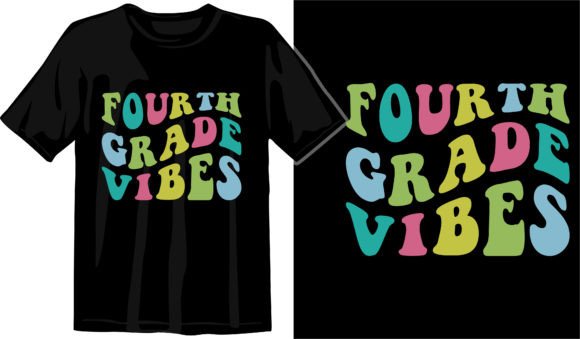
Fourth Grade Vibes SVG, Back to School: A Versatile Digital Design System for Educators and Makers
When the calendar flips to late summer, a distinctive energy emerges—crayons sharpened, backpacks restocked, and classrooms quietly humming with anticipation. That energy has a visual language: bold colors, playful typography, and nostalgic motifs that resonate across generations. The Fourth Grade Vibes SVG, Back to School collection taps directly into this cultural moment—not as fleeting trendware, but as a thoughtfully engineered set of digital assets built for real-world application across education, entrepreneurship, and creative expression.
What Makes This Design More Than Just “Cute”?
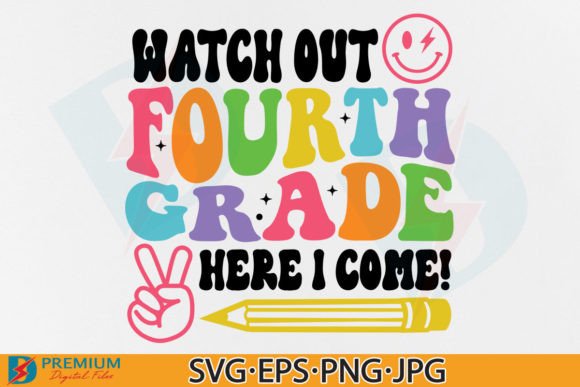
At first glance, the Fourth Grade Vibes SVG, Back to School design appears joyful and accessible—wavy stacked text, retro color palettes, and hand-drawn charm. But its underlying structure reveals deeper intentionality. Unlike generic clipart or overused school-themed graphics, this design system was constructed with technical precision in mind: vector scalability, layer separation for multi-step sublimation, and clean cut paths optimized for both Cricut and Silhouette machines. Every curve, kerning adjustment, and stroke weight supports functional use—not just aesthetic appeal.
For example, the wavy stacked text isn’t merely decorative. Its vertical rhythm allows it to scale cleanly from 2-inch vinyl decals on water bottles to 14-inch iron-on transfers on teacher tote bags—without pixelation, distortion, or alignment drift. That’s because the core file is an SVG (Scalable Vector Graphic), meaning it’s mathematically defined rather than pixel-based. When paired with included DXF and EPS formats, users gain compatibility across laser cutters, CNC routers, and professional print workflows—tools educators increasingly use in makerspaces and after-school STEM labs.
Practical Applications Across Diverse Contexts
This isn’t a one-use graphic. Its versatility stems from format diversity and intentional design constraints:
- Classroom Integration: Teachers print high-resolution PNG files (300 DPI) for bulletin board headers, laminated behavior charts, or student award certificates. The retro styling bridges generational familiarity—older educators recognize the mid-90s classroom aesthetic, while students respond to its upbeat, uncluttered clarity.
- Small-Business Production: Crafters and print-on-demand sellers use the SVG and DXF files to cut heat-transfer vinyl for custom teacher shirts. Because layers are pre-separated by color and material type, a single design can be adapted for glitter HTV, matte black iron-on, or even rhinestone templates—all without manual rework.
- Sublimation Workflows: The included sublimation-ready PNGs feature transparent backgrounds and CMYK-optimized color profiles. When applied to ceramic mugs or polyester drawstring bags, the design retains vibrancy through high-heat press cycles—a critical detail often overlooked in amateur designs that fade or bleed under pressure.
- Educational Technology Extensions: Some districts embed these SVGs into interactive whiteboard lessons or digital classroom banners. Because SVGs support embedded interactivity (via JavaScript or CSS), teachers can animate letters or trigger sound cues during morning meetings—turning static visuals into responsive learning tools.
Why Format Variety Matters—Beyond “Just Another Download”
The inclusion of JPG, DXF, SVG, PNG, EPS, and sublimation-specific variants isn’t feature bloat—it reflects distinct technical requirements across production ecosystems:
- SVG serves web embedding, Cricut Design Space, and scalable signage projects where resolution independence is non-negotiable.
- DXF ensures compatibility with industrial-grade cutting equipment used in school fabrication labs or small manufacturing co-ops.
- PNG delivers transparency and print-ready raster fidelity—essential for sticker sheets, digital newsletters, or social media announcements.
- EPS remains the gold standard for commercial printers requiring editable vector output compatible with Adobe Illustrator and legacy RIP software.
- JPG offers universal compatibility for quick previews, email attachments, or low-bandwidth sharing—without sacrificing legibility at common display sizes.
Crucially, all files share consistent naming conventions and folder organization (e.g., “Fourth Grade Vibes SVG Back To School – Sublimation – Light Background.png”). This reduces setup time and minimizes errors—especially important when educators or volunteers manage multiple design assets across academic years.
User-Centered Considerations for Real-World Use
Designs live or die by how well they accommodate actual workflows—not idealized ones. Here’s what sets this collection apart in practice:
Color Accessibility: The retro palette avoids problematic combinations (e.g., red/green overlays) and maintains WCAG 2.1 AA contrast ratios against both light and dark substrates. This means a “Back to School” decal remains legible on navy backpacks or white ceramic mugs without user-side adjustments.
Cut File Precision: For Cricut and Silhouette users, every outline includes a 0.01mm stroke tolerance and closed path validation. No hidden open nodes, no overlapping anchors—just reliable cuts on first pass. That saves hours of troubleshooting during back-to-school prep crunch time.
Sublimation Readiness: Unlike many “sublimation PNG” listings that simply resize RGB JPEGs, these files include embedded ICC profiles, proper bleed margins (0.125”), and halftone-safe gradients—ensuring crisp edges and consistent color reproduction on polyester blends and coated ceramics.
Teacher Shirt Optimization: The primary layout accounts for standard apparel print zones: centered chest placement (for youth and adult tees), left-chest sizing (for polo-style wear), and full-back scaling (for oversized hoodies). No guesswork—just drag-and-drop alignment in most DTG or screen-print RIP software.
Who Benefits—and How They Leverage It Differently
The strength of Fourth Grade Vibes SVG, Back to School lies in its cross-role utility:
- Classroom Teachers use the PNGs for printable name tags, weekly schedule posters, and editable Google Slides templates—reducing prep time while reinforcing visual consistency across learning spaces.
- School Administrators deploy the EPS files in official communications—welcome banners, orientation handouts, and district-wide newsletters—projecting cohesive branding without licensing fees or vendor dependencies.
- PTA Fundraisers apply the SVGs to vinyl-cut spirit wear, sublimated water bottles, and iron-on tote bags—generating revenue with minimal upfront cost and zero inventory risk (digital-only fulfillment).
- Hobbyists & Side Hustlers integrate the wavy stacked text into layered SVG bundles for Etsy shops, using the DXF variant to expand into wood-burned signs or acrylic keychains—diversifying product lines without redesigning from scratch.
- Curriculum Developers embed the vector elements into interactive PDFs or SCORM-compliant e-learning modules, where scalable text remains sharp on tablets, desktops, and smartboards alike.
Implementation Notes for Long-Term Value
Because this is a digital product you must download, not a physical item shipped to you, longevity depends on thoughtful file management. Users report best outcomes when they:
- Create a dedicated folder labeled with year and use-case (e.g., “2024-FourthGradeVibes-Sublimation-Mugs”) to avoid version confusion.
- Convert SVGs to outlines before importing into older versions of Silhouette Studio or CorelDRAW—preventing font substitution errors.
- Test sublimation prints on scrap fabric first, using the provided PNG’s embedded color profile to calibrate printer settings.
- Archive original ZIP files separately from edited versions—preserving untouched source assets for future reprints or format updates.
There’s also pedagogical value in the design’s intentional restraint. With only three primary type weights (bold wavy, medium stacked, light script accents), it avoids visual overload—a subtle nod to cognitive load theory. Students process information more efficiently when typography supports, rather than competes with, content. That principle extends beyond the classroom: clear visual hierarchy helps parents quickly identify event dates on a PTA flyer or lets retail staff instantly recognize product categories on shelf tags.
Looking Beyond the First Day of School
While rooted in back-to-school timing, the Fourth Grade Vibes SVG, Back to School system functions as a foundational toolkit—not a seasonal artifact. Its retro-modern balance makes it adaptable for end-of-year celebrations, literacy night banners, science fair displays, or even staff appreciation weeks. Because the files are editable vectors, users can swap out “Back to School” for “Science Fair 2024” or “Reading Champions” in minutes—retaining all stylistic integrity and technical readiness.
That adaptability reflects a broader shift in educational resource creation: away from static, siloed materials toward modular, interoperable assets. In this context, the design isn’t just decoration—it’s infrastructure. A shared visual language that connects lesson plans, community outreach, and student engagement across platforms, devices, and delivery methods.
Whether you’re pressing a teacher shirt before sunrise, prepping a classroom sign during planning period, or launching a small batch of sublimated notebooks for a school store, the Fourth Grade Vibes SVG, Back to School collection meets you where you are—with precision, flexibility, and quiet respect for the work you do.