Retro Back to School T-shirt Design, Wat: A Strategic Creative Asset for Purpose-Driven Brands
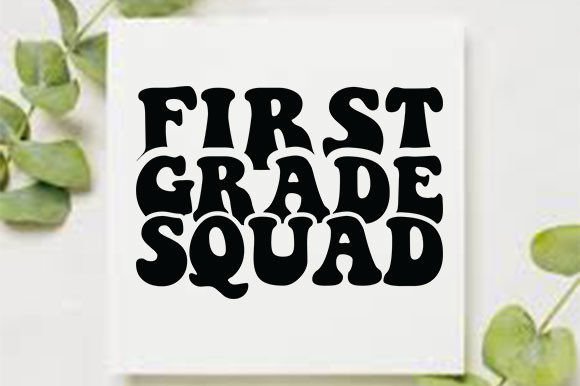
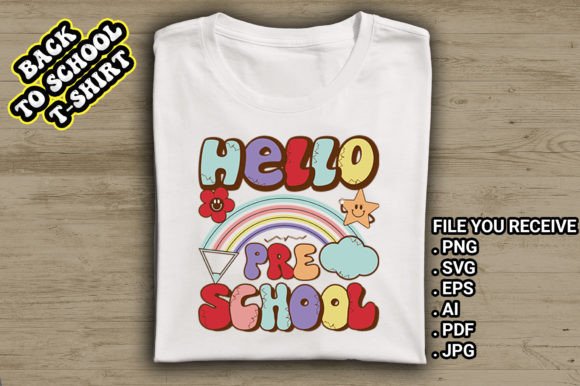
“Retro Back to School T-shirt Design, Wat” isn’t just a playful phrase—it’s a precise, production-ready creative asset with tangible utility across branding, merchandising, and audience engagement. At its core, it’s a cohesive, nostalgic visual concept—think bold 80s typography, sun-faded color palettes, and subtle classroom iconography—packaged in professional-grade vector and raster formats (EPS, SVG, PNG, DXF). Its strategic value lies not in nostalgia alone, but in how deliberately it can be deployed to signal authenticity, spark recognition, and support measurable business outcomes.
Why This Design Fits Real-World Business Needs
For entrepreneurs launching apparel lines, educators building school spirit campaigns, or freelancers expanding their design portfolios, Retro Back to School T-shirt Design, Wat offers more than aesthetic appeal. It delivers speed-to-market without sacrificing quality: the inclusion of EPS and SVG files ensures crisp scalability for print-on-demand platforms, large-format signage, or embroidered patches. The DXF file unlocks laser-cut vinyl applications—ideal for custom tote bags, laptop decals, or classroom bulletin board elements. Meanwhile, the high-res PNG supports immediate use in social ads, email headers, or digital course welcome kits.
This isn’t generic clip art. The “Wat” in the title signals intentional quirk—a nod to irreverent, self-aware humor that resonates particularly well with adult learners, homeschooling parents, and Gen X/Y professionals who remember chalkboards, Trapper Keepers, and the ritual of buying new notebooks each August. That specificity builds trust: audiences recognize when a brand understands their lived experience, not just demographic data.
When Strategic Timing Makes All the Difference
Timing determines impact. Retro Back to School T-shirt Design, Wat performs strongest when aligned with actual behavioral cycles—not calendar dates alone. For example:
- Educators can deploy it in late July for back-to-school prep workshops, pairing the design with printable lesson-planning checklists or classroom supply lists—turning visual appeal into functional engagement.
- Small retailers using print-on-demand benefit most by uploading assets in early August, ahead of peak search volume for “back to school shirts” (which spikes mid-July through early September, per Google Trends).
- Freelance designers use the SVG version to rapidly customize mockups for client pitches—swapping colors or adding names in under two minutes—demonstrating responsiveness without compromising originality.
Using it in March or November risks misalignment. Without contextual relevance, even strong design becomes background noise—not a signal.
How to Use It With Intention—Not Just Convenience
Intentional use starts with clarifying your objective before opening the ZIP file. Ask: Is this for revenue generation? Community building? Brand reinforcement? Each goal demands different execution.
If revenue is the priority, treat Retro Back to School T-shirt Design, Wat as a product foundation—not a standalone item. Layer it with complementary assets: a matching mug design, a printable “First Day Checklist,” or a short video tutorial on styling retro-inspired outfits. Bundle these thoughtfully, and you’re selling an experience—not just a shirt.
If community is the aim, consider co-creation. Share the SVG file (with appropriate usage terms) in a private Slack group for homeschooling parents, inviting them to tweak colors or add their child’s grade level. That transforms passive consumption into active participation—and gives you authentic user-generated content you can repurpose ethically.
Branding applications require restraint. Using the full design on a website hero banner may dilute focus; instead, extract one iconic element—the retro pencil icon, for instance—and integrate it subtly into your favicon or email signature. Consistency compounds over time; repetition without variation exhausts attention.
Risks of Context-Free Deployment
Without clear goals or audience alignment, Retro Back to School T-shirt Design, Wat can unintentionally undermine credibility. A financial advisory firm slapping it on a webinar slide about Q3 tax planning creates cognitive dissonance—not charm. Similarly, applying it to a high-stakes corporate training manual signals unseriousness, not approachability.
There’s also operational risk. Relying solely on the PNG without verifying color profiles (CMYK vs. RGB) can result in mismatched print output—especially problematic for bulk orders. Skipping a test print on the intended fabric type may reveal unintended transparency in light-colored inks or poor contrast in small text areas. These aren’t design flaws—they’re process gaps.
Finally, legal clarity matters. While the ZIP includes production-ready files, verify licensing scope: Does it permit resale? Modification? Use in SaaS platform templates? Assuming broad rights without documentation invites future friction—particularly if scaling beyond initial pilot use.
Practical Integration: From File to Function
Start with format mapping—match each file type to its highest-leverage use case:
- EPS: Best for commercial printers requiring vector fidelity at any size—ideal for screen-printed t-shirts, banners, or promotional posters.
- SVG: Optimal for web use, interactive tools, or dynamic customization (e.g., embedding in a Shopify app that lets customers change text color or add initials).
- PNG: Use only where transparency or pixel-perfect rendering is required—social media ads, email graphics, or preview thumbnails.
- DXF: Leverage for craft-based applications—vinyl cutting for classroom door signs, acrylic desk nameplates, or DIY back-to-school gift sets.
Don’t skip metadata. Rename files descriptively before archiving: retro-back-to-school-wat-eps-v1-commercial-print, not “design1.eps.” Future-you (or your team member) will move faster when searching for the right variant.
Long-Term Value Beyond the Season
The strongest ROI from Retro Back to School T-shirt Design, Wat emerges over time—not in a single campaign. Repurpose intelligently: invert the color scheme for a “Winter Break Countdown” version; isolate the “4th grade” motif for a graduation-themed iteration (“Watch out, 5th grade—here I come!”); or adapt the layout for non-academic milestones (“Watch out, first job—here I come!”).
Track what sticks. If social posts featuring the design generate above-average saves or shares, analyze why: Was it the caption? The audience segment? The timing? Let real behavior—not assumptions—guide your next adaptation.
Most importantly, let it serve your voice—not define it. A great design asset amplifies clarity; it doesn’t replace strategy. Use Retro Back to School T-shirt Design, Wat as one thoughtful tool among many—not the centerpiece of your entire plan.