Back to School Clipart Watercolor: A Strategic Creative Asset for Modern Educators and Design Professionals
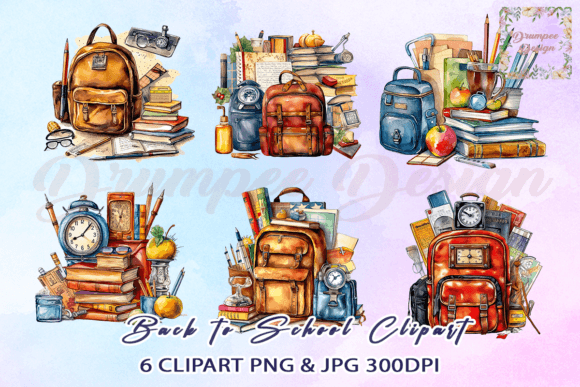
Back to School Clipart Watercolor isn’t just another seasonal design trend—it’s a purpose-built creative resource that bridges aesthetic intention with professional utility. At its core, it represents a curated collection of hand-painted, digitally refined illustrations—think chalkboards, apples, pencils, notebooks, globes, and joyful student silhouettes—all rendered in soft, expressive watercolor textures. But what distinguishes this offering is not only its visual warmth but also its technical precision: each design is delivered as high-resolution PNG and JPEG files at 4000×4000 px, 300 dpi, RGB color mode, with full transparency support and zero watermarks. This combination makes it uniquely suited for professionals who require both artistic authenticity and production-ready fidelity.
Why Watercolor Aesthetics Are Resonating Across Industries
Watercolor has surged beyond craft blogs and kindergarten classrooms—it’s now embedded in brand identities, educational SaaS platforms, print-on-demand storefronts, and even corporate learning materials. Its appeal lies in its duality: it conveys approachability and humanity while retaining sophistication when executed with intention. Unlike flat vector icons or photorealistic stock imagery, watercolor textures introduce subtle variation—soft edges, pigment bleed, gentle granulation—that signal care, authenticity, and human touch. In an era where audiences increasingly distrust overly polished or algorithmically generated visuals, watercolor serves as a quiet differentiator.
This resonance extends across sectors. EdTech startups use watercolor elements to soften the interface of learning dashboards; independent curriculum designers integrate them into printable worksheets to reduce cognitive load and increase engagement; small-business owners leverage them for back-to-school social media campaigns that feel personal rather than promotional. Even marketers targeting millennial and Gen Z parents respond well to watercolor’s nostalgic yet contemporary tone—it evokes childhood curiosity without leaning into cliché.
From Decoration to Delivery: The Technical Rigor Behind Creative Flexibility
What sets Back to School Clipart Watercolor apart from generic clipart libraries is its intentional technical architecture. Each file is created natively in RGB color mode at 300 dpi—a specification aligned with industry standards for high-fidelity digital display *and* professional printing. The 4000×4000 px canvas ensures scalability without pixelation, whether used on a 24-inch classroom poster or zoomed into a detail-rich Instagram carousel.
The inclusion of transparent PNG files is especially consequential for working professionals. Designers building branded slide decks can layer watercolor elements over gradients or photos without clipping masks. Print-on-demand creators can place motifs directly onto mugs, tote bags, or lesson planners—no background removal required. And because no watermark appears on downloaded assets, users retain full commercial rights for client-facing deliverables, internal training materials, or product packaging—provided usage complies with the license terms.
It’s worth underscoring a practical nuance: color fidelity depends on proper software configuration. When preparing files for print, ensuring your editing application (e.g., Adobe Photoshop, Affinity Designer, or Canva Pro) is set to RGB mode—not CMYK—and maintains 300 dpi output prevents unintended shifts in hue or contrast. This isn’t a limitation of the asset—it’s a reflection of how tightly modern creative workflows integrate color science with design execution.
Meeting Evolving Workflow Expectations
Today’s creative professionals operate in hybrid environments: one moment designing for screen, the next prepping for sublimation, embroidery, or offset print. That versatility demands assets that behave predictably across contexts. Back to School Clipart Watercolor meets this need by delivering dual-format files (PNG + JPEG) with consistent dimensions and resolution. JPEGs offer broad compatibility for web use and email newsletters; transparent PNGs enable non-destructive compositing in layered projects.
For sublimation users—educational product developers, school spirit vendors, or boutique stationery makers—the requirement for a dedicated sublimation printer and heat press isn’t a barrier but a signal of intent. It indicates that the buyer understands the material science behind dye-sublimation: how RGB-encoded pigments translate under heat and pressure onto polyester substrates. This level of technical awareness reflects a broader shift in the creator economy—where “design skill” now includes knowledge of output hardware, substrate behavior, and color management pipelines.
Strategic Use Cases Beyond the Obvious
While many reach for back-to-school clipart during August planning cycles, forward-looking professionals deploy these assets year-round as modular brand components. Consider these real-world applications:
- Custom Learning Pathways: An online course creator uses watercolor math symbols and graduation caps to visually segment modules—transforming abstract curriculum structure into intuitive, emotionally resonant navigation.
- Internal Onboarding Kits: HR teams at growing edtech firms incorporate watercolor “first-day checklist” graphics into digital welcome packets—humanizing administrative processes and reinforcing company culture.
- Subscription Box Curation: A STEM subscription service for kids layers watercolor lab equipment motifs over product photography, creating cohesive unboxing moments that reinforce thematic continuity across physical and digital touchpoints.
- Interactive PDF Resources: Instructional designers embed transparent watercolor borders and dividers into downloadable teacher guides—enhancing scannability without compromising accessibility or file size.
Each example demonstrates how Back to School Clipart Watercolor functions less as decoration and more as a semantic tool—carrying meaning through texture, tone, and placement.
Aligning With Broader Consumer and Cultural Shifts
Two macro-trends converge here: the rise of intentional curation and the demand for context-aware creativity. Consumers—whether parents selecting classroom supplies or district administrators evaluating vendor proposals—are increasingly discerning about visual coherence. They notice when a website’s typography clashes with its iconography, or when printed materials look digitally “off” due to mismatched color profiles. Professionals who source assets like Back to School Clipart Watercolor do so not just for convenience, but to assert control over narrative consistency.
Simultaneously, educators and entrepreneurs are rejecting one-size-fits-all templates in favor of bespoke systems. A watercolor apple isn’t merely a symbol of teaching—it becomes part of a visual language that communicates values: warmth, growth, individuality, patience. That language scales across formats: from a laminated behavior chart to a keynote slide to a custom-branded Zoom background.
Final Considerations for Informed Implementation
Acquiring high-quality clipart is only the first step. Its impact multiplies when integrated with intentionality. Before downloading, assess your workflow stack: Do your primary tools support transparent PNG layers? Is your print provider calibrated for RGB input? If using for sublimation, have you tested color output on your target fabric blend? These aren’t hurdles—they’re checkpoints that ensure your investment translates into measurable outcomes: higher engagement rates, stronger brand recall, smoother production handoffs.
Also remember: the absence of a watermark is not an invitation to bypass licensing clarity. While these files empower commercial use, responsible deployment means honoring attribution requirements (if any), respecting territorial restrictions, and verifying permitted use cases—especially in regulated sectors like early childhood education or standardized test preparation.
In sum, Back to School Clipart Watercolor exemplifies how specialized digital assets evolve alongside professional practice. It merges tactile artistry with technical discipline, serving creators who understand that every pixel carries meaning—and that preparation, in both design and execution, remains the most reliable foundation for success.